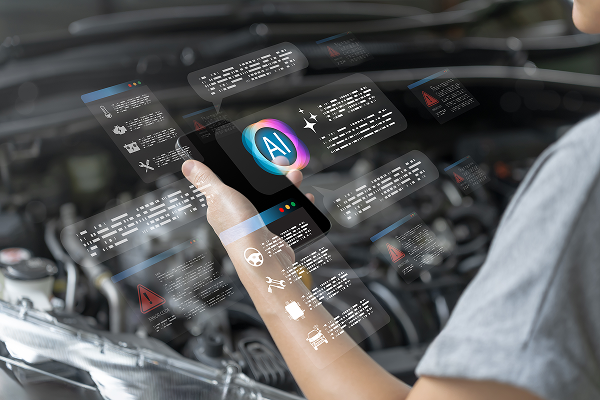
AI in the Automotive Industry
Artificial intelligence has become part of everyday life. It’s quite amazing how it can help us complete tasks and find niche information in seconds. However, there are still areas where experience, specialized equipment, and hands-on expertise matter more than you think, and the automotive industry is one of them.
AI Can't Diagnose Your Vehicle
AI can be a helpful starting point if you're trying to understand a warning light or unusual symptom. Based on your description, it may suggest common causes, explain how a system works, or help you prepare questions for your mechanic.
What AI cannot do is accurately diagnose your vehicle.
A proper diagnosis requires information AI doesn't have access to, including:
- Diagnostic trouble codes
- Live data from scan tools
- Physical inspections
- Test drives
- Pressure, voltage, and electrical testing
- A technician's experience recognizing patterns that aren't obvious from symptoms alone
Many different problems can produce the same symptom. For example, an engine misfire could be caused by a faulty spark plug, a bad ignition coil, a fuel injector issue, low compression, a vacuum leak, or dozens of other possibilities. Without testing, any diagnosis is simply an educated guess.
AI gathers information from publicly available sources and general automotive knowledge. It doesn't inspect your vehicle or verify which repair actually solves the problem.
Why AI Can't Write an Accurate Repair Estimate
It's natural to want to know whether a repair quote is reasonable, especially if you're unfamiliar with automotive repairs. While AI can provide rough price ranges, it should not be relied on to generate an accurate repair estimate. The cost of a repair at a small independent shop in a rural area could cost more than twice that at a dealership in a major city, and it’s hard for AI to be a fair judge of these differences based on the vast array of possibilities.
Repair costs vary significantly depending on factors such as:
- Your vehicle's make, model, year, and engine
- Your geographic location
- Local labor rates
- The quality of replacement parts
- The condition of the vehicle
- Whether additional repairs are discovered during the job
However, even when fed this information, it does not make up for the fact that AI is not an experienced technician.
If you're trying to determine whether an estimate is fair, ask your repair shop to explain the labor involved, the type of parts being installed, and why the repair is necessary. A reputable shop will be happy to walk you through the estimate and answer your questions.
Understanding Labor Time
Most professional repair shops use industry labor guides that provide a standard "book time" for specific repairs as the foundation of their estimates.
Book time is the estimated amount of time required to complete a repair under ideal, near perfect conditions. Real-world repairs are often more complicated.
Technicians may encounter:
- Rusted or seized parts
- Broken bolts
- Previous repairs performed incorrectly
- Corroded wiring
- Additional diagnostic work
- Required test drives or system calibrations
These factors can significantly affect the actual time needed to complete a repair, which shops take into consideration when making estimates.
Parts Matter More Than Most People Realize
Another challenge is the wide range of replacement parts available.
A repair estimate can vary substantially depending on whether the shop uses:
- OEM (Original Equipment Manufacturer) parts
- High-quality aftermarket parts
- Economy aftermarket parts
- Remanufactured parts
- Used parts
- Custom or performance parts
Without knowing exactly which parts will be installed, it's impossible to accurately estimate the total cost of a repair. Even when the type of part is known, parts pricing can still fluctuate based on brand, availability, shipping, warranties and more.
A Better Way to Use AI
Rather than asking AI for an exact diagnosis or repair price, use it to become a more informed vehicle owner.
AI can help give you tips, including to:
- Learn how a vehicle system works
- Understand common causes of a symptom
- Prepare questions to ask your technician
- Learn what a suggested repair typically involves
- Compare the advantages and disadvantages of different replacement parts
When it comes to diagnosing a problem or creating an accurate repair estimate, a qualified technician with the proper diagnostic equipment remains the most reliable source.
AI can be a great educational tool, but it's not a replacement for the experience, testing, and hands-on expertise required to accurately diagnose and repair today's vehicles.